
Sudoku rules in one sentence
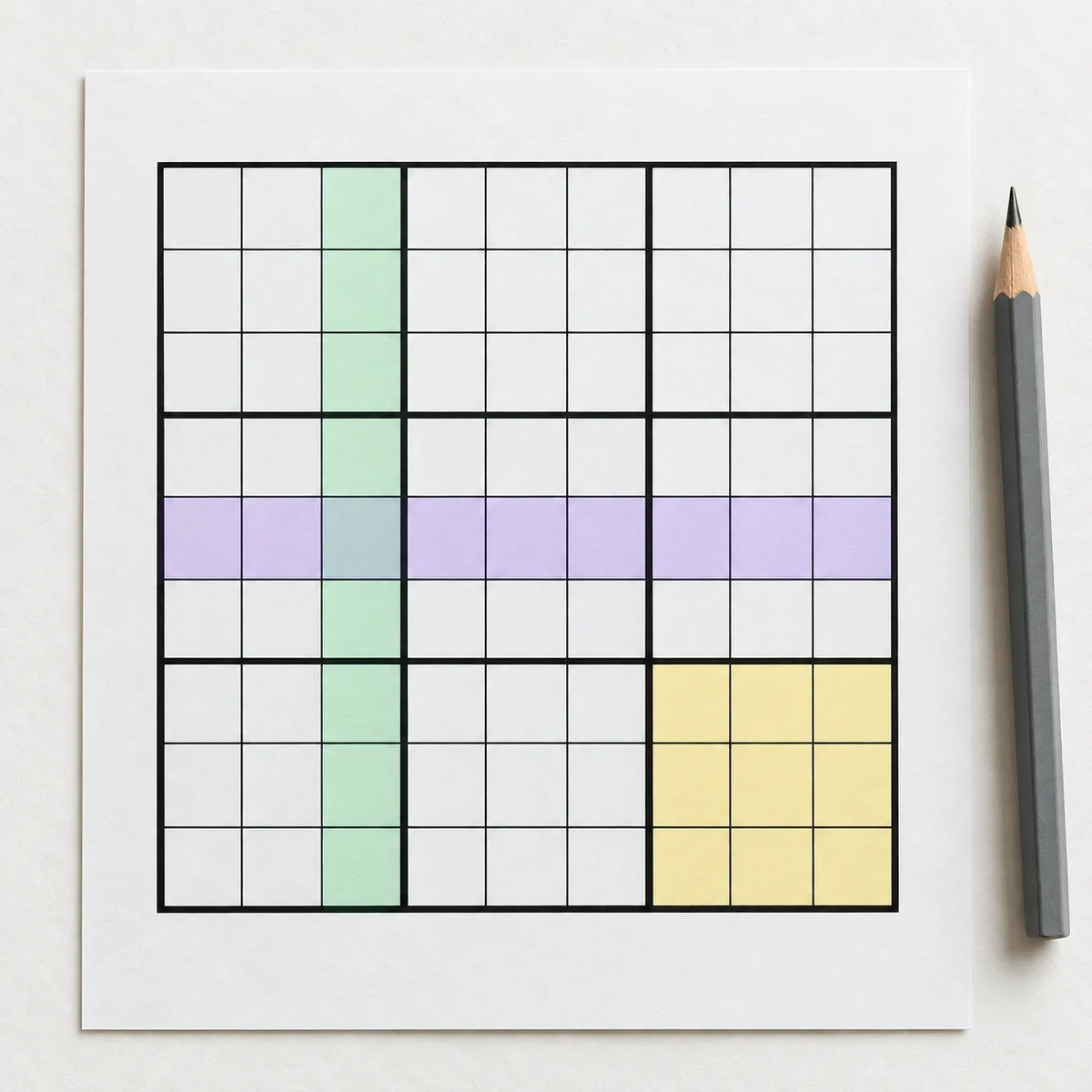
A classic grid has 9 rows and 9 columns, for a total of 81 cells. It is also divided into nine square boxes, each measuring 3×3 cells. The goal is to fill every empty cell with a digit from 1 to 9 while respecting the same three constraints throughout: a digit cannot appear twice in one row, one column or one box. These Sudoku rules apply to every empty cell, not only to areas that are nearly complete.
The digits printed in the starting grid are clues. They stay where they are and cannot be replaced. The remaining cells are deduced from those clues: for each one, look for digits that do not already appear in any of its three units. There is no addition, multiplication or increasing sequence to calculate. Sudoku is a logic puzzle, not an arithmetic problem. Understanding the Sudoku rules starts with the difference between a possible candidate and a placement that has been proved.
This guide describes classic Sudoku. A puzzle may feel easier or harder depending on how many clues it gives and where they sit, but the placement rule stays the same. Variants such as diagonal Sudoku or Killer Sudoku add a separate constraint. Their extra rule should be explained before play begins.
The three constraints in classic Sudoku
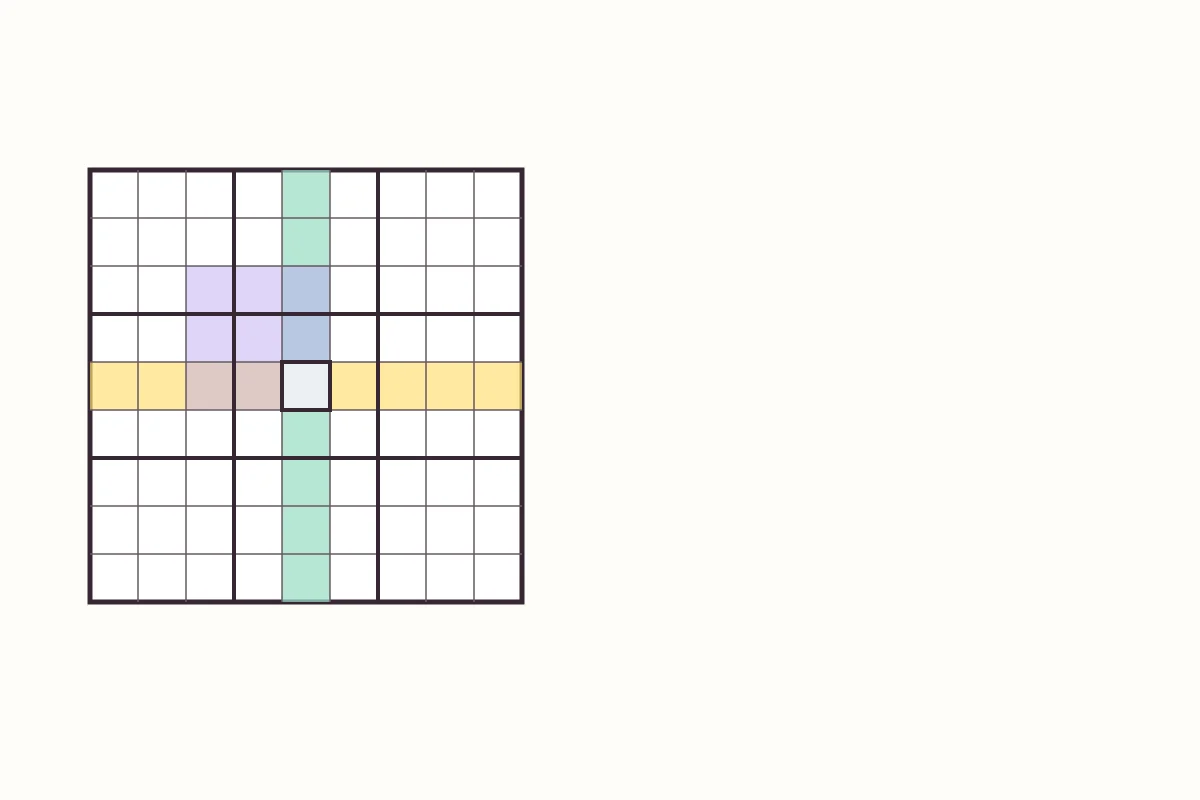
A row runs horizontally through the cell. A column runs vertically through it. A box is the 3×3 square that contains it. These three groups overlap: every cell belongs to one row, one column and one box, even though each group contains a different set of other digits. This intersection is at the heart of the Sudoku rules.
When checking a suggestion, inspect all three units rather than only the easiest one to scan. If a 6 is already in the row, it is forbidden in every empty cell in that row. The same restriction applies if the 6 is in the column or box. Conversely, the absence of a duplicate makes a digit possible, but does not by itself prove it is the answer. Other candidates and deductions in the grid still matter. Sudoku rules allow a candidate at this point; they do not automatically confirm the solution.
How to check a placement step by step
Suppose an empty cell seems to accept the digit 5. Find its row and look for another 5. Make the same check in its column, then in its 3×3 box. If the digit appears in any of those areas, the suggestion is impossible and can be eliminated. If all three checks are clear, 5 remains a candidate to consider. This applies the Sudoku rules without requiring arithmetic.
To confirm that 5 is the solution, also ask whether other digits could fit in the cell and whether 5 could go elsewhere in the row, column or box. A cell with one candidate is useful evidence. A digit that fits in only one cell of a unit is also forced. Both observations follow from the rules without assuming the answer in advance. The Sudoku rules help you eliminate options before you decide.
- Scan the row from left to right and note the digits already present.
- Scan the column from top to bottom to remove its existing digits.
- Check all nine cells in the 3×3 box, even if its border is less obvious.
- Keep the remaining digits as candidates; place one only when a deduction supports it.
A simple way to start a Sudoku grid
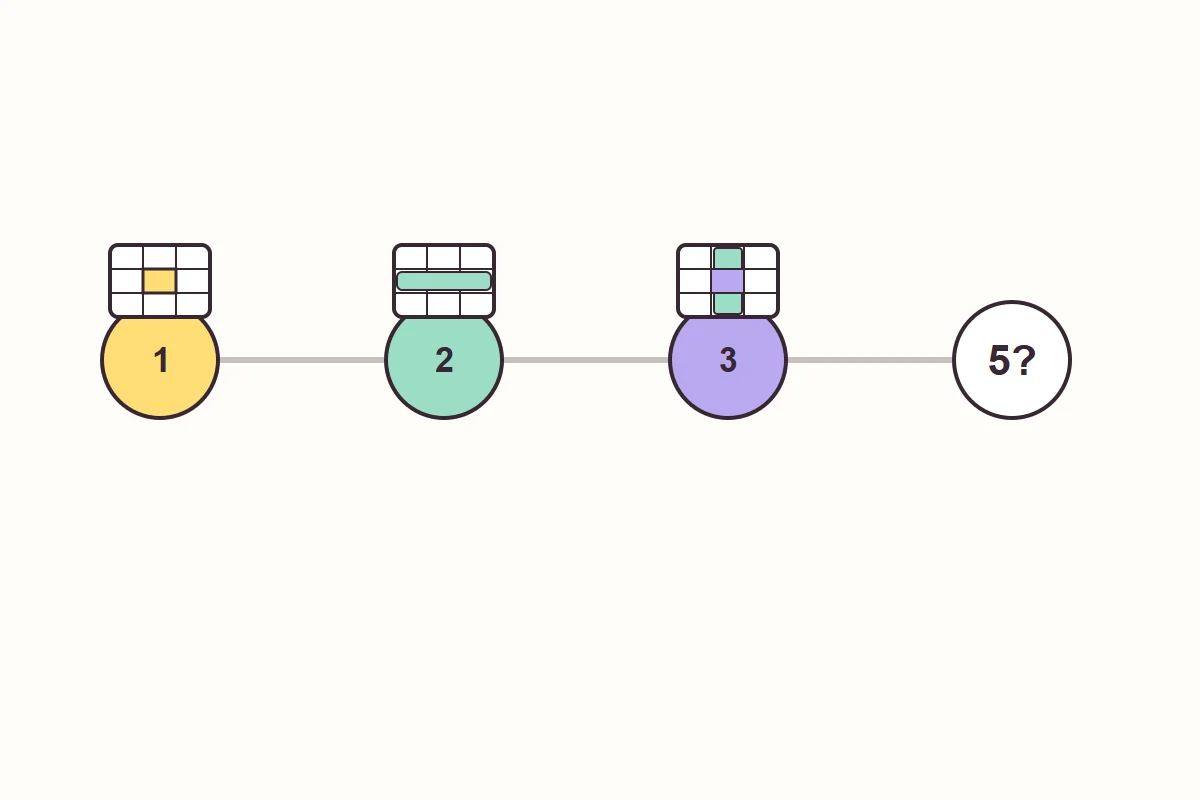
Look over the whole grid, then choose a unit that is already well filled. A row, column or box with many clues has fewer possibilities and is quicker to inspect. Ask which digits from 1 to 9 are missing, then check each empty cell to see which of them can actually go there. Reading the grid this way follows the Sudoku rules and avoids choosing a number at random.
When a cell has one candidate, the rules determine its value. After writing it, reread the three units that pass through that cell: the new digit may complete a row, narrow a column and simplify a box. Then scan again. This cycle of observation and updating is a practical method for a first game. The classic Sudoku rules stay fixed while the information in the grid changes.
If several candidates remain, note them lightly or use the notes feature in your grid. Candidates are not temporary answers; they help you compare cells and spot contradictions later. You can move to another unit and return after finding new digits. There is no required order for solving the entire grid, and you do not need to make an unsupported guess to keep progressing.
Candidates and common mistakes
A candidate is a digit that creates no immediate duplicate in a cell's row, column or box. The list may contain several digits and will change as the grid fills. After each placement, review candidates in neighboring cells: the new digit is now forbidden in the three units it shares. Keeping candidates current makes the Sudoku rules easier to apply consistently.
The most common mistake is checking only the row and column while forgetting the 3×3 box. Another is treating the absence of a conflict as proof: if two digits remain possible, the rules have not decided between them yet. Writing an early guess can cause a long chain of errors, especially when it is not marked as a hypothesis.
If you become unsure, do not erase the entire grid. Return to the latest certain placement, inspect its three units and look for a repeated digit. If you use candidates, remove only those made impossible by new information. A well-designed puzzle can be solved by deduction, although some advanced techniques compare several possibilities. The basic Sudoku rules do not change.
- Check the 3×3 box after checking the row and column.
- Do not confuse a possible candidate with a proven solution.
- Update candidates in all three affected units after each placement.
- After an error, return to the latest certain fact instead of adding guesses.
What the basic rules do not decide
The rules say which placements are allowed, but they do not describe every solving technique. Simple elimination, a single candidate and a digit that fits in only one cell are good first habits. Pairs, alignments and other methods help later when candidates overlap. These are deduction methods, not new Sudoku rules. The classic rules remain the starting point for each technique.
The number of visible clues is not, by itself, a reliable measure of difficulty. Two grids with a similar number of starting digits may require very different reasoning. Difficulty also depends on where the clues are placed and which techniques are needed to progress. The Sudoku rules do not change with the displayed level; the reasoning becomes more demanding.
Finally, check the puzzle type before you start. In a diagonal variant, the two long diagonals may also have to contain each digit once. In Killer Sudoku, cages and sums add another condition. For classic Sudoku, remember only the three units that meet at each cell: row, column and box. You can then start a game or print a blank grid to practise the method.
Frequently asked questions about Sudoku rules
What are the rules of classic Sudoku?
Sudoku rules require digits 1 through 9 to appear once in every row, column and 3×3 box. The clues given at the start stay fixed.
Can a digit repeat in a row or box?
No. A digit can appear only once in each of the three units. A duplicate in the row, column or box makes the placement invalid.
Do you need to calculate to play Sudoku?
No. Classic Sudoku uses digits as symbols. There are no arithmetic operations or values to compare; placements come from logical elimination.
Is a possible digit automatically the solution?
No. Under the Sudoku rules, no duplicate means only that the digit is a candidate. Another deduction is needed when more than one possibility remains.
Where should a beginner start?
Choose a row, column or box with many clues, identify the missing digits and check the candidates in each empty cell. Start with a placement that has only one possibility.
Do Sudoku variants use the same rules?
They usually keep the row, column and box constraints, then add a stated condition, such as one for diagonals or cages. Read that extra rule before playing.
Further reading
These French-language reference guides also explain classic Sudoku rules and placement checks.