
How to use a free printable Sudoku generator
Decide how the sheet will be used before choosing a level. Four easy grids on one page work well for a short break. A child or anyone who writes large will be more comfortable with one large grid. A classroom often needs identical copies and a separate answer page. The free printable Sudoku generator on this site lets you choose these settings and inspect the preview before printing. A printable Sudoku is a practical choice for a short screen-free session.
Match the difficulty to the time and independence of the player. Easy is a gentle introduction, medium offers more candidates to compare, and hard needs patient scanning of intersections. The number of empty cells is only a clue; the position of the givens can make two sheets feel very different. Test one page on the paper used for the session because printer margins and scaling vary.
Before printing a batch, check the preview: are the givens dark enough, are the cells large enough for notes, and are the answer keys separated from the exercises? A compact layout saves paper only when the clues stay readable. A short test prevents an entire class set from becoming uncomfortable to solve.
- Choose the number of grids for the available solving time, not only for page capacity.
- Use four grids for general practice and one large grid for many pencil marks.
- Print a test sheet before a classroom handout or a long trip.
- Keep answer keys separate when the sheet is meant for independent work.
Read a paper grid with the three constraints
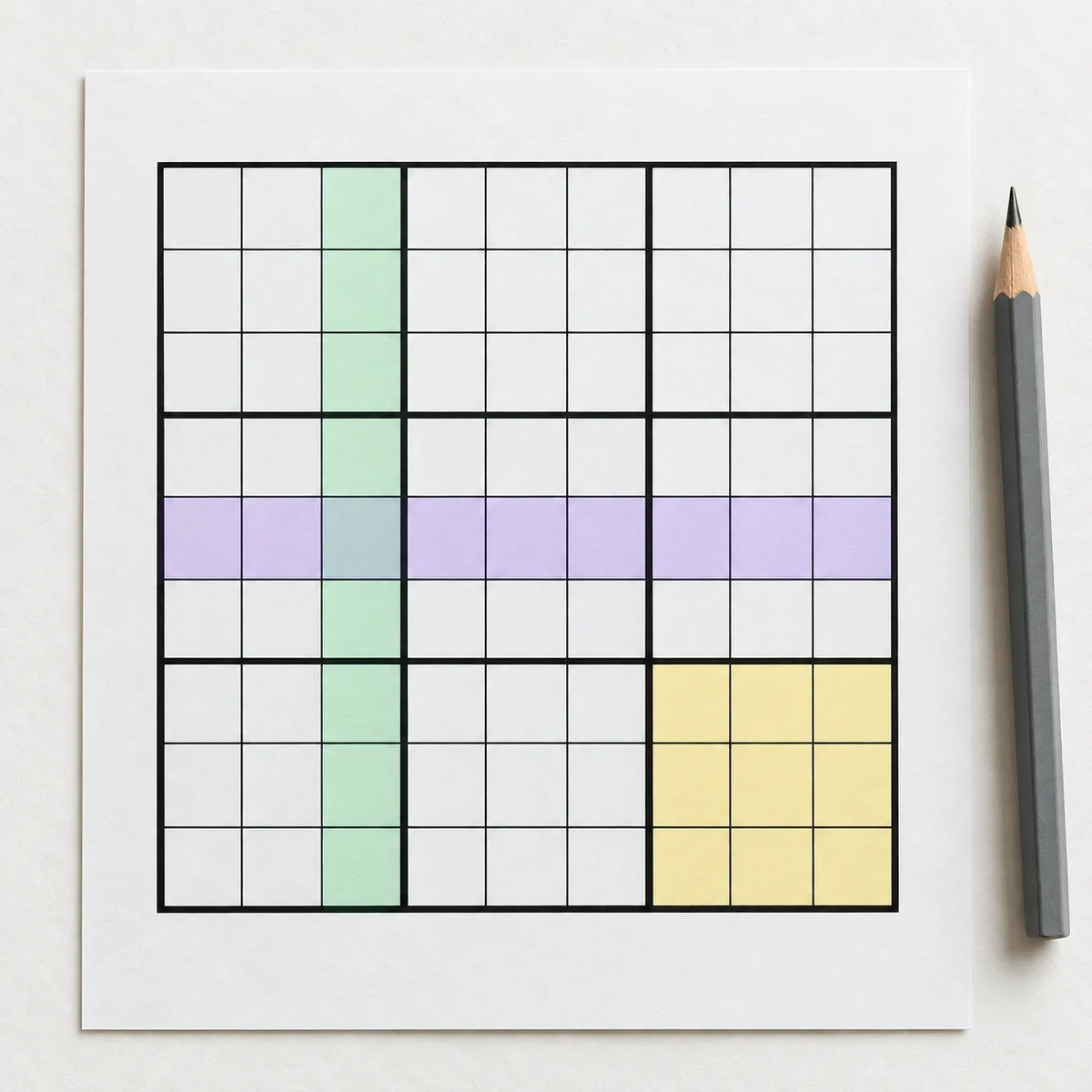
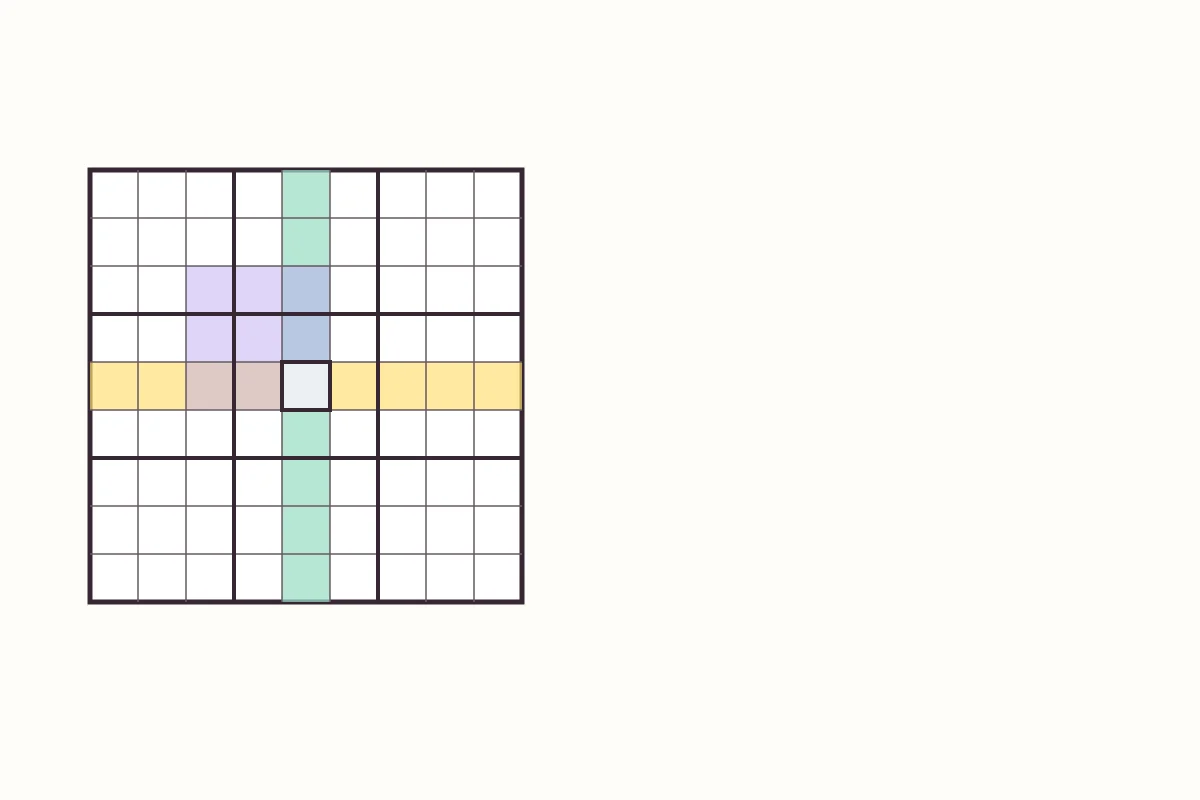
A classic grid has nine rows, nine columns and nine 3 by 3 boxes. Each digit from 1 to 9 appears once in every unit. On a screen, colors can highlight a zone; on paper, use a finger, ruler or deliberate eye movement to connect a cell with its row, column and box. A digit missing from a unit is possible, but it is not proof yet.
To test a cell at a row and column intersection, cross out digits already present in the row. Do the same in the column and then in the box. The digits left are the candidates. If one remains, the deduction is certain. If two or three remain, write them small and move to a fuller unit instead of guessing.
This routine reduces reading errors on a dense sheet. It is also easy to explain to a child: find the missing digit in three places, then check that it is not repeated. A group correction can follow the same row, column and box order so that each player can explain a placement instead of copying an answer.
Three simple techniques that avoid guessing
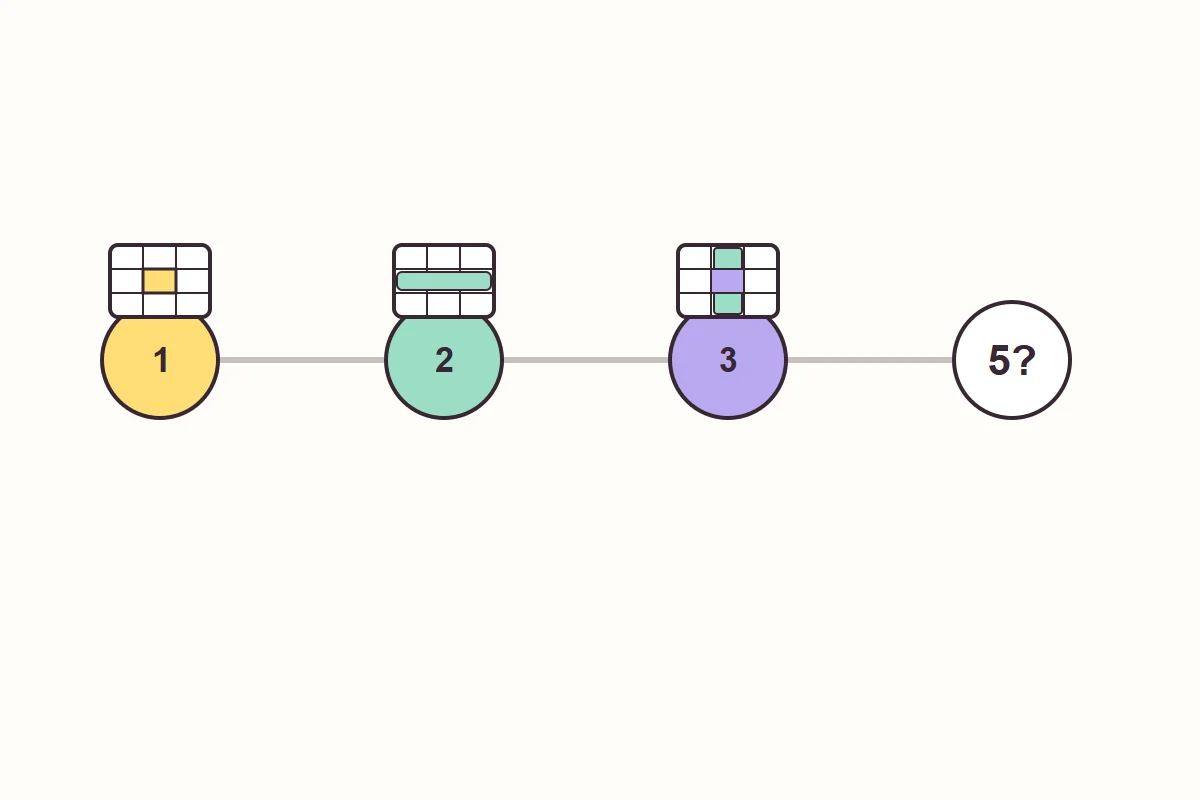
The first technique is a naked single: after checking its row, column and box, a cell has only one possible digit. Write it in the center and update nearby candidates. The second is a hidden single. A row may have several open cells, but one missing digit can have only one possible position. Mark that position in your notes before confirming it.
The third technique is a naked pair. If two cells in one row, column or box contain exactly the same two candidates, those digits belong to those cells. Remove the pair from the other cells in that unit. On paper this needs small writing and a clean eraser; use a scrap sheet if the marks become crowded.
Do not force every technique into a fixed order. Alternate a box scan, a search for singles and a candidate update. The goal is one certain piece of information per pass. Advanced patterns can wait: for a beginner session, a printable Sudoku and consistent checking are more useful than memorising a long list of names.
- Naked single: one cell has one possibility after the three checks.
- Hidden single: one digit has one position in a unit.
- Naked pair: two cells reserve two candidates and free the rest of the unit.
- After each placement, erase only candidates made impossible by that new digit.
Correct a printed grid without losing the thread
A useful correction shows more than the final answer. Return to the last certain placement and reread its row, column and box. If a digit appears twice, mark the duplicate and erase the more recent entry. This keeps valid deductions and avoids restarting the whole grid.
Use a simple writing convention. Confirmed digits go in the center; candidates stay small in a corner or margin. Do not use several colors without a clear purpose. In a group, ask anyone proposing a digit to name the three checks they made. That short explanation turns a result into a verifiable method.
When no cell moves, change zones instead of assuming. A nearly full row can reveal a digit in a box, while a crowded box can unlock a column. A hypothesis may be useful for very hard puzzles, but label it and test it until a contradiction. For printable Sudoku aimed at beginners, prefer grids solvable by elimination and provide a separate answer key.
- Keep the last certain fact as a return point.
- Write candidates small and confirmed digits in the center.
- Explain every correction with the row, column and box.
- Never hide a hypothesis among confirmed placements.
Adapt printable Sudoku for children or a class
For a child, grid size and session length matter as much as difficulty. An easy grid with many givens makes it possible to practise rows and columns without filling the page with notes. Start with one rule, then ask the child to explain the box check. A black and white sheet, a ruler and an erasable pencil are enough; equipment should not replace the reasoning.
In class, set an observable goal: find five singles, explain one pair or correct one precise mistake. Give groups the same level and keep the answers out of sight. A session can have three phases: quiet reading, paired solving and a reasoned correction. Mixed levels help only when each group knows its assignment and has realistic time.
The label easy does not guarantee a fit for every learner. Ask students to signal when they have no certain deduction, then offer a clue limited to one row or box. This keeps the logic active. For homework, state the expected time, materials and whether answers are included so an adult can support without giving the solution immediately.
- Use a larger grid and more givens for a first activity.
- Set a short, checkable goal instead of a speed contest.
- Keep the answer key separate and give local clues.
- Provide scrap paper for candidates and explanations.
Print, store and reuse your grids
A4 portrait suits most home printers. In the system preview, keep scale at 100 percent or actual size and disable automatic reduction that makes cells too small. With six grids on a page, check the top and bottom margins because a printer may trim a few millimetres. One test page is cheaper than a stack that nobody can read.
To store a set, sort sheets by level and date and keep answers in a separate envelope. A transparent sleeve protects grids used with an erasable pen, while matte paper is easier to mark with pencil. You can also save the print preview as a PDF, but open the file once before closing the tab.
The generator runs in the browser, so its settings and grids prepare your sheet rather than building a remote library. If you refresh the page, simply generate a new set and check the preview again. Open the printable Sudoku generator when you want a new level or layout, then return to this method to solve with controlled deductions. Keep a printable Sudoku with your notes so you can resume the same reasoning after a break.
- Start with A4 portrait and actual-size printing.
- Test one page before a large print run.
- Store answers separately to protect the exercise.
- Use matte paper and an erasable pencil for candidates.
Questions about printable Sudoku
What layout is best for printable Sudoku?
Four grids per page usually balance quantity and writing space. One large grid is better for children, seniors or difficult puzzles; six small grids suit a compact set.
How do I choose an easy printable Sudoku?
Select the easy or level 1 setting and inspect the preview. A beginner grid has enough givens for singles and cells large enough for notes.
Can these grids be used at school?
Yes. Prepare copies of the same level, keep answers separate and ask students to explain the row, column and box they checked.
What if a printed grid seems stuck?
Return to the last certain placement, check duplicates and update candidates in the three units. Then change to another box or column before considering a hypothesis.
Which techniques come after singles?
Learn hidden singles and naked pairs first. Locked candidates and alignments are a natural next step and still rely on the same three constraints.
References and examples
These public pages were checked to compare printable formats, difficulty levels and correction advice.